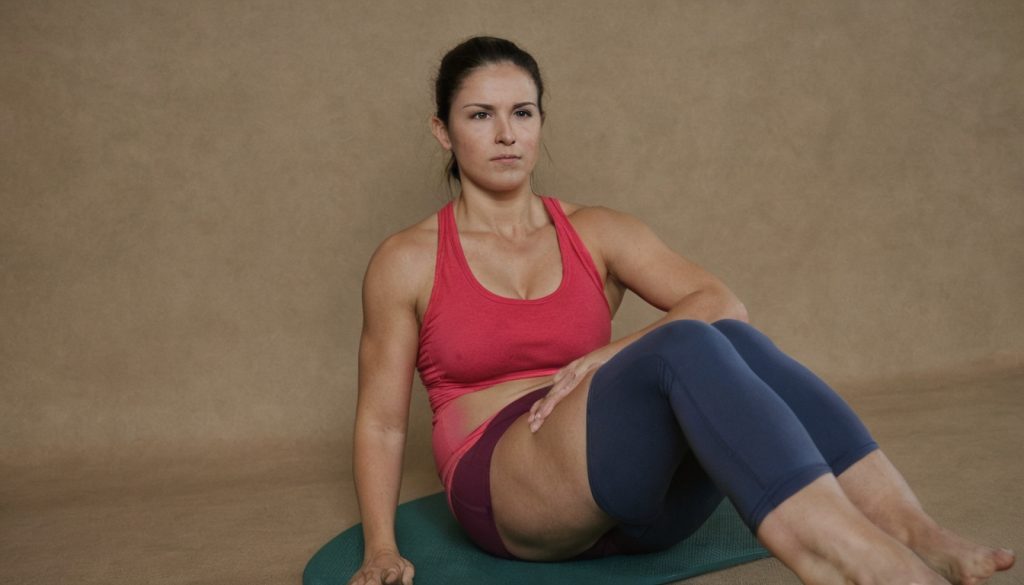
The workout is finished, fatigue is rising, and an ab circuit is queued on the phone. Before starting another round of planks and crunches, ask the question most routines skip: what specific result is this extra work supposed to produce?
Do abs workouts belong in every exercise routine?
Abs workouts do not automatically belong in every routine. Direct abdominal training earns its place when it addresses a defined gap that the rest of the program does not adequately cover.
Direct training includes crunches, planks, rollouts, and similar exercises performed specifically to challenge the trunk. Indirect loading occurs while the trunk supports squats, push-ups, loaded carries, climbing, running, or sport practice. Both can be useful, but they do not create identical demands.
Trunk strength means producing or resisting substantial force. Muscular endurance means sustaining repeated contractions or a position. Visible abdominal definition describes appearance, which also depends on body composition and anatomy rather than strength alone.
- Yes: You have a specific goal, limited exposure to the required trunk demand, a measurable shortfall, and enough recovery capacity to add work.
- No: Existing training already supports the goal, performance is progressing, and extra core muscle exercises would displace more important movement, aerobic, or recovery priorities.
- Uncertain: The goal is vague, the gap cannot be measured, or pain, pressure, bulging, leakage, numbness, or unexplained weakness appears during exercise.
This decision test applies to generally healthy, recreationally active adults. Rehabilitation patients, pregnant or recently postpartum readers, and anyone under surgical restrictions need individualized guidance rather than self-testing.
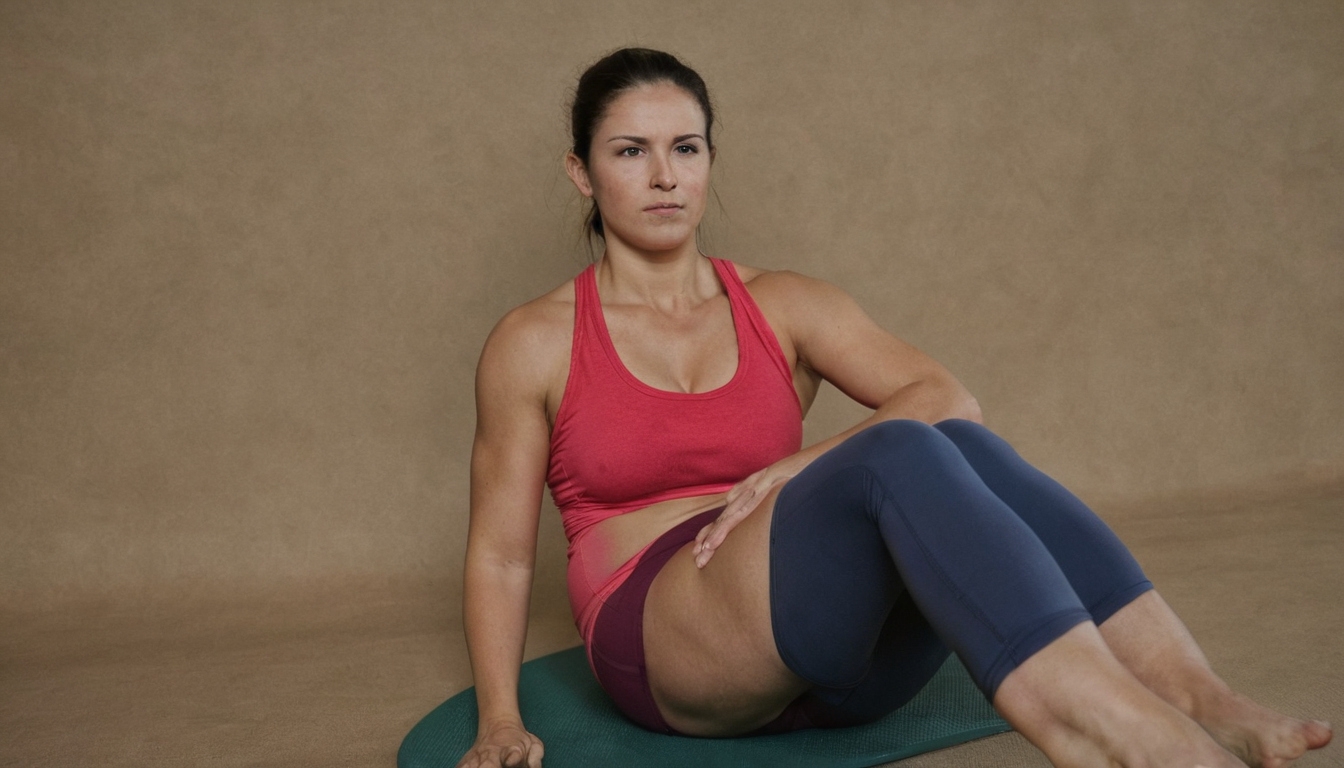
Do abs workouts belong in every exercise routine shown as an editorial planning reference.
Direct abdominal training is justified when it fills a measurable training gap
A useful gap might be stalled progression on a planned trunk exercise, insufficient endurance for a specific task, or no direct hypertrophy work despite an appearance-focused goal. Direct work should have a target and a progress signal, such as better control, more resistance, or longer task-specific tolerance. Symptoms or a complex injury history call for assessment by a qualified coach, physical therapist, pelvic-health specialist, or physician.
Direct abdominal training may be optional when the existing routine already supplies enough trunk demand
Compound resistance exercises, calisthenics, loaded carries, and sport practice can impose meaningful trunk demands, although no category trains every trunk function equally. An acute comparison of integrated and isolated core exercises led its authors to favor isolated exercises for activation and possible hypertrophy before integrated work. That conclusion followed one familiarization session and one experimental session, so muscle activation alone cannot establish long-term strength, muscle growth, performance transfer, injury prevention, or safety.
The next step is to match the exercise to the desired result rather than adding a generic finisher.
Which abs workouts match strength, sport, appearance, endurance, and daily-function goals?
The most suitable abs workouts depend on the intended outcome: progressive resistance fits strength or muscle-growth goals, repeated efforts fit endurance demands, and task-specific bracing fits sport, lifting, or daily activities.
| Goal | Useful training quality | Suitable exercise category | Progression signal | Common mismatch |
|---|---|---|---|---|
| Trunk strength | High force against resistance | Loaded flexion, anti-extension, anti-rotation | More resistance with controlled form | Only extending hold time |
| Local endurance | Sustained or repeated submaximal effort | Timed holds or controlled repetitions | More time or repetitions at consistent quality | Treating fatigue as proof of strength |
| Abdominal hypertrophy | Progressively challenging muscle tension | Resisted flexion and other loadable ab workout exercises | More load, range, or difficult repetitions | Expecting exercise selection alone to reveal definition |
| Sport force transfer | Sport-relevant force direction, stance, speed, and duration | Bracing, rotation, anti-rotation, carries | Better task performance without lost control | Copying a generic circuit |
| Daily-task confidence | Control while lifting, carrying, reaching, or rising | Scaled carries, hinges, get-ups, and bracing drills | A task becomes more controlled or manageable | Training only a floor-based test |
Abdominal strength and abdominal endurance require different progress checks
Abdominal strength means producing greater trunk force, usually judged by handling more external resistance through a defined range or position. Muscular endurance means sustaining or repeating a lower-force effort. A longer plank therefore demonstrates task-specific endurance, not necessarily greater maximal strength.
Timed holds and repetition tests can provide useful personal baselines, but comparisons require the same technique, range, tempo, rest, and stopping rule. Motivation, discomfort, and unfamiliarity can change the result, so trends across several sessions matter more than one score.
Sport-focused core muscle exercises should reflect the sport’s actual demands
Rotational athletes may need controlled rotation and resistance to unwanted rotation. Runners may emphasize repeated trunk and pelvic control under fatigue; contact athletes may need bracing from varied directions; strength athletes may prioritize forceful bracing under load. These core muscle exercises should complement sport practice, not promise automatic performance transfer or injury prevention.
Daily-function goals need task-specific exercises rather than a universal core test
Daily function is best judged against the actual task, such as carrying groceries, reaching overhead, rising from the floor, or holding position while lifting. Rehabilitation findings should not be generalized casually. A Cochrane review of trunk training after stroke examined activities of daily living, trunk function, balance, walking, and other outcomes in adults with ischemic or hemorrhagic stroke, not generally healthy exercisers.
In comparisons where treatment duration was not matched, trunk training was associated with better daily-living and trunk-function outcomes, but the evidence was rated very low certainty. Differences in therapy time may have contributed to the results. The example shows why population, training dose, and actual task must be considered before selecting a movement demand.
Flexion, anti-extension, anti-rotation, and loaded carries train different trunk demands
Ab workout exercises are better grouped by the trunk demand they create than by popularity: some produce movement, others resist it, and loaded carries challenge trunk position during locomotion. No category is universally superior; the goal, load, technique, tolerance, and progression determine its value.
| Category | Primary task | Examples | Equipment | Progression | Technique limitation |
|---|---|---|---|---|---|
| Trunk flexion | Shorten the front of the trunk | Curl-up, cable crunch | Mat or cable | More resistance or controlled range | Hip movement may replace trunk movement |
| Anti-extension | Resist excessive arching | Plank, rollout | None, wheel, or ball | Longer lever or added load | Fatigue may shift motion to the lower back |
| Anti-rotation | Resist trunk turning | Band press, offset hold | Band or cable | More tension or narrower stance | Body rotation can reduce the intended demand |
| Lateral resistance | Resist side bending | Side plank, suitcase hold | None or weight | Longer lever or heavier load | Shoulder or grip may limit the set first |
| Rotation | Turn through a controlled range | Cable rotation, chop | Band or cable | More load, range, or speed | Motion may come mainly from the hips or arms |
| Hip-flexion dominant | Raise the legs or thighs | Knee raise, leg raise | Floor or bar | Straighter legs or greater range | Pelvic control may fail before abdominal fatigue |
| Loaded carry | Maintain position while walking | Farmer or suitcase carry | Weights | Load, distance, or asymmetry | Grip and walking space can constrain training |
The trunk is broader than the visible rectus abdominis. The internal and external obliques, transversus abdominis, spinal extensors, diaphragm, pelvic-floor musculature, and other supporting muscles contribute to pressure, position, and movement. A systematic review of core-muscle activity evaluated six core muscles in healthy adults and described this wider anatomical system.
Dynamic trunk exercises and isometric trunk exercises solve different programming problems
Dynamic exercises train controlled movement through a selected range; isometric exercises train the ability to hold position against force. Curl-ups may suit a trunk-flexion goal, while planks or offset carries may better match resistance to unwanted motion. Neither method is automatically safer or more functional.
- Check range tolerance: Shorten or change a movement that causes pain rather than forcing the prescribed range.
- Check task relevance: Select movement or resistance that resembles the strength gap without pretending an exercise perfectly reproduces a sport or job.
- Check technical failure: Stop or regress when fatigue changes trunk position or shifts work elsewhere.
The healthy-adult review searched five databases under PRISMA guidelines for studies published from January 2012 through March 2020. Free-weight exercises produced the greatest reported rectus-abdominis, external-oblique, and erector-spinae activity, while other categories led for certain muscles. The review also found little transversus-abdominis research and inconsistent measurement methods. These findings compare acute electrical activity, not long-term adaptation.
Hip-flexion-dominant exercises are not automatically good exercises for abs
Leg raises and hanging knee raises can involve substantial abdominal effort, but the hip flexors also lift the thighs. The abdominal muscles help control pelvic position and resist unwanted spinal extension. A smaller range, bent knees, or supported variation may improve control, but no cue guarantees comfort. Persistent back, groin, or pelvic symptoms warrant individualized assessment.
Core muscle activity rankings cannot identify the best long-term exercise
Electromyography records muscle activity under tested conditions; it does not prove superior long-term strength, growth, transfer, adherence, or safety. In one acute comparison of isolated exercises and lunges, prone bridges, side bridges, and back extensions generally produced greater mean and peak activity than three lunge variations. Exercise duration was matched at 20 seconds, including five lunge repetitions, and the resisted lunge reached 75 newtons of external trunk resistance. Unstable-surface lunges did not increase activation compared with the other tested lunges.
An earlier systematic review of healthy-adult EMG studies searched six databases and compared traditional core, core-stability, ball or device, free-weight, and noncore free-weight exercises. It reported category-specific findings for the lumbar multifidus, transversus abdominis, and quadratus lumborum, including similar transversus-abdominis activity between stability and ball or device exercises. The review did not identify one universal winner.
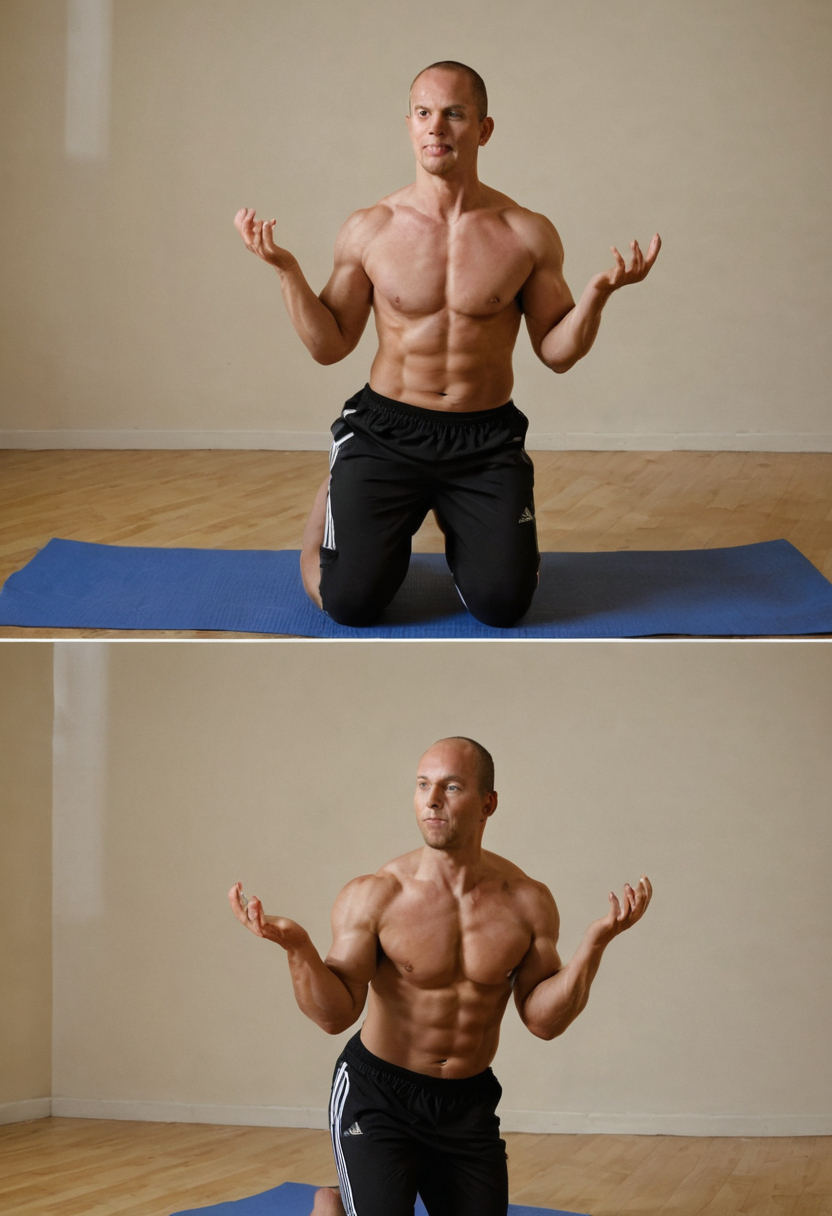
Flexion, anti-extension, anti-rotation, and loaded carries train different trunk demands shown with practical context cues.
Electrode placement, normalization methods, exercise load, participant experience, and limited access to deeper muscles can affect EMG comparisons. The useful question is not which exercise produces the largest laboratory signal, but which relevant movement can be performed, progressed, and recovered from.
Direct ab work should be added only after its dose, progression, and recovery cost are defined
Direct ab work becomes useful programming only when the exercise, effort, volume, frequency, and progression method match the goal. More repetitions are not automatically better. Start with tolerable work, preserve technique, progress one variable at a time, and leave enough recovery for higher-priority training.
A short core block can fit after the routine’s major priorities
Optional core work should not displace full-body strength, aerobic activity, sport practice, or needed recovery. Before adding it, use this four-step diagnostic:
- Identify the goal: Strength, muscular endurance, muscle growth, sport performance, or a specific daily task.
- Select one or two demands: Flexion, anti-extension, anti-rotation, lateral resistance, rotation, or carrying.
- Choose a baseline variation: Use a version that allows controlled breathing and repeatable technique without symptoms.
- Define a progression marker: Record resistance, repetitions, hold duration, range, lever length, or movement quality.
Direct exercises may be integrated into compound movements, placed between compatible exercises, or completed as a brief accessory block after priority work. Readers with limited time should choose a workout routine around time, equipment, and recovery, then train the largest verified gap rather than adding an automatic finisher.
Abdominal exercises need progression rather than endless repetition
Strength-focused work generally favors harder variations, greater resistance, longer rest, and fewer controlled repetitions. Hypertrophy-focused work uses challenging sets that approach technical fatigue, while endurance work extends repetition or hold capacity. No single set, repetition, or frequency prescription fits every direct abdominal exercise.
Progression can mean adding resistance, lengthening the lever arm, increasing controlled range, slowing a difficult phase, adding repetitions, or imposing a harder stability constraint. Change one variable after the current version is repeatable and symptom-free. Acute electromyography cannot establish the best long-term dose for strength or growth.
Training dose deserves the same scrutiny as exercise selection. The Cochrane stroke review searched major databases, trial registries, and bibliographies through October 25, 2021, and analyzed dose-matched separately from non-dose-matched comparisons. That rehabilitation evidence does not prescribe a healthy adult’s routine, but the distinction reinforces a useful planning rule: more training time is a separate variable, not proof that one exercise category is better.
Regress or stop when technique repeatedly breaks down, breathing cannot be controlled, or pain, pressure, bulging, dizziness, or other concerning symptoms appear. Ordinary muscular effort is expected; symptoms are not a progression target. Even well-programmed abs workouts strengthen muscle without guaranteeing the appearance outcome many people expect.
Abs workouts can strengthen abdominal muscles but cannot selectively remove abdominal fat
Abs workouts can improve abdominal strength, endurance, control, and potentially muscle growth, but they are not a reliable method for removing fat specifically from the waist. Visible definition also depends on overall body composition, fat distribution, genetics, muscle size, training consistency, nutrition, sleep, and individual health context.
Visible abdominal definition is not a direct measure of core strength or health
The rectus abdominis is crossed by tendinous intersections that create the familiar segmented appearance. The number, shape, and symmetry of visible segments vary naturally. A four-pack or six-pack therefore reflects anatomy and visibility, not a standardized level of trunk strength, athletic ability, or health.
No universal body-fat threshold guarantees definition. Sex, genetics, fat distribution, lighting, posture, hydration, and measurement methods affect what appears visible. Extreme dieting, dehydration, or compulsive exercise is neither necessary nor a sound test of fitness.
Spot-reduction claims require stronger evidence than local muscle fatigue
Research testing abdominal exercise alone has generally not shown meaningful, selective abdominal-fat loss. A burning sensation indicates local muscular effort and fatigue, while muscle activation describes nervous-system recruitment. Neither outcome demonstrates that nearby fat tissue is being preferentially reduced.
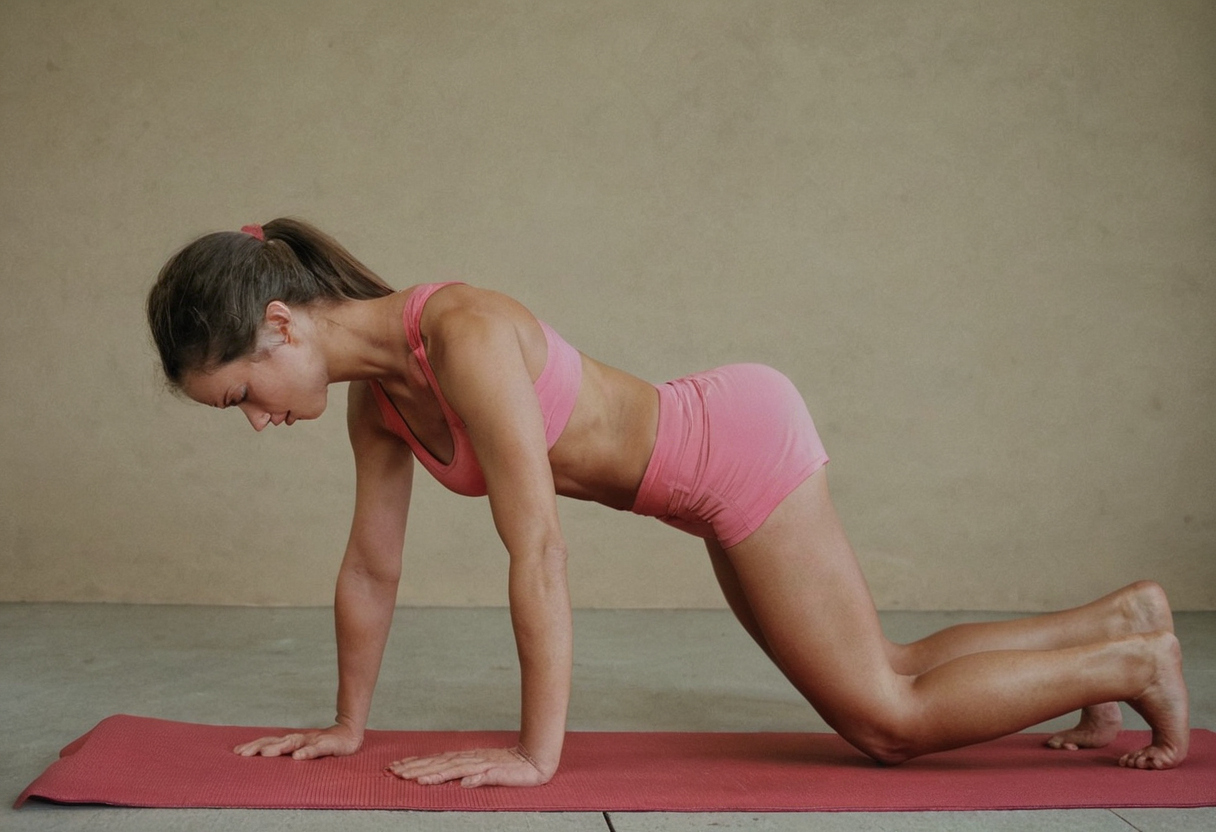
Abs workouts can strengthen abdominal muscles but cannot selectively remove abdominal fat shown as an editorial planning reference.
Long-term fat change depends primarily on broader energy balance and individual physiology, while direct training may separately increase abdominal capacity or muscle size. Adults managing medical conditions, medications, pregnancy, or disordered-eating concerns should discuss nutrition or weight-management decisions with an appropriately qualified clinician or registered dietitian.
Pain, pregnancy, pelvic-floor symptoms, and abdominal surgery change the ab exercise decision
Symptom-sensitive readers should not use a generic abs workout in place of individualized advice. Current back or abdominal pain, recent surgery, pregnancy, postpartum recovery, hernia concerns, pelvic pressure, leaking, bulging, numbness, or unexplained weakness can change appropriate loading.
Back pain requires symptom-guided assessment rather than a universal core exercise
Stronger abdominal muscles do not automatically resolve back pain, and no single core exercise suits every case. Exercise may form part of care for nonspecific low back pain, but selection should reflect symptoms, function, tolerance, and professional assessment.
Stop training and seek prompt medical assessment for sharp or escalating pain, pain radiating into a limb, new numbness, progressive weakness, fever, major trauma, or unexplained symptoms. New loss of bladder or bowel control or numbness around the groin requires urgent assessment.
Pregnancy and postpartum core training require stage-specific guidance
Pregnancy and postpartum recommendations depend on trimester or recovery stage, previous activity, delivery factors, symptoms, and clinician guidance. Pain, pelvic heaviness, urinary or fecal leakage, worsening abdominal bulging, bleeding, dizziness, or pressure should prompt assessment rather than a harder progression. A pelvic-health professional can evaluate abdominal-wall and pelvic-floor concerns without assuming that one exercise treats them.
Abdominal surgery and hernia concerns require clinician-set loading limits
Post-surgical restrictions vary with the procedure, incision, healing status, complications, symptoms, and treating surgeon’s instructions. Wound opening, drainage, fever, increasing redness, severe pain, vomiting, or a painful bulge requires timely medical advice. Suspected hernias should not be tested through loaded sit-ups or planks without clearance.
Define the gap first: If symptoms or recovery restrictions control the decision, obtain individualized guidance before adding direct ab work. Otherwise, add it only when a clear goal, measurable progression, and acceptable recovery cost justify it.
Frequently asked questions about abs workouts
What category of exercise do abs workouts fall under?
Abs workouts generally fall under resistance or muscular-endurance training, depending on the exercise and dose. A heavily resisted cable crunch is closer to strength training, while a long plank or high-repetition circuit emphasizes local endurance. Rotation, anti-rotation, and loaded carries may also support sport or task-specific training.
Do abs workouts count as strength training or as a full workout?
Challenging, progressively loaded abdominal exercises can count as strength training for the muscles involved. A short ab circuit is not usually a complete workout because it does not address the major movement patterns, aerobic activity, or the broader needs of the body.