
What should a beginner do when the only available training days are adjacent? Repeating the same hard workout is usually unnecessary. A recovery day is the simpler default, but a modified second session can work when movement quality, performance, and symptoms remain acceptable.
Should beginners repeat the same full-body workout on consecutive days?
For generally healthy beginners, repeating an identical hard full-body session on consecutive days may reduce second-day movement quality without adding a clear programming advantage.
- Beginner: an adult with limited recent experience in structured resistance training.
- Full-body workout routine: a session that loads most major muscle groups or movement patterns, not literally every muscle.
- Identical hard session: the same exercises, working sets, repetitions, external loads, ranges of motion, and proximity to muscular failure. Muscular failure means being unable to complete another repetition with acceptable technique.
- Main concern: consecutive training is not automatically harmful. Modify the second day if unresolved fatigue reduces technique, range of motion, or performance.
This guidance applies to generally healthy adults. It does not cover recovery from surgery, acute injury, systemic illness, pregnancy-related restrictions, or conditions requiring individualized clinical limits.
Repeating a workout twice per week is different from repeating it every day
Two nonconsecutive sessions can use the same exercise list while providing a recovery interval. Daily repetition removes that interval and accumulates overlapping work. Training frequency must therefore be judged alongside weekly sets, load, and effort.
Some fit, young, healthy adults may recover within 24 hours, but that finding does not generalize to every beginner. Cleveland Clinic describes rotating muscle groups, using gentle recovery activity, or reducing training intensity when training days remain adjacent. The next question is what dose was performed and which tissues the second session would load again.
Recovery after a beginner full-body workout depends on the dose and the tissues loaded
Recovery means restoring enough movement tolerance and performance for the planned training dose. It does not require eliminating every trace of soreness, and calendar time alone cannot establish readiness.

Recovery after a beginner full-body workout depends on the dose and the tissues loaded shown as an editorial planning reference.
Working-set volume means sets performed after warm-up. External load, repetitions, relative effort, and proximity to muscular failure also shape the dose. Novel exercises and limited prior exposure can affect the next session. Eccentric loading means producing force while a muscle lengthens, such as controlling the lowering phase of a squat.
Local fatigue affects a specific working region, while whole-body fatigue appears as broadly reduced energy or performance. Joint or tendon pain requires separate consideration because it is not interchangeable with muscle soreness. Delayed-onset muscle soreness, or DOMS, is tenderness and stiffness that develops after unfamiliar or demanding exercise. Soreness alone does not establish readiness or injury.
The second workout must be judged by overlapping movement patterns and muscle groups
| Pattern | Common exercises | Likely next-day overlap |
|---|---|---|
| Squat or lunge | Back squat, split squat, step-up | Quadriceps, gluteals, knees, and hips |
| Hinge | Deadlift, hip hinge, bridge | Hip extensors and posterior chain |
| Push | Push-up, bench press, overhead press | Chest, shoulders, and triceps |
| Pull | Row, pulldown, pull-up | Back, shoulders, and elbow flexors |
| Carry or trunk | Farmer carry, plank, dead bug | Grip and trunk control |
Exercise names can conceal repeated loading. Replacing a hard back squat with a hard split squat still repeats substantial knee and hip demand. Coaches should also decide whether separate ab exercises belong in the routine rather than adding redundant trunk work to both days.
Training frequency and recovery cannot be separated from weekly volume
An American College of Sports Medicine overview of reviews examines how resistance-training prescriptions affect muscle function and hypertrophy in healthy adults. The position stand updates ACSM’s 2009 progression guidance and was prepared through an evidence-synthesis process, but population-level guidance cannot determine one person’s next-day readiness.
A meta-regression preprint covering 67 studies and 2,058 participants associated higher frequency with negligible hypertrophy effects and diminishing strength returns. Greater weekly volume was associated with greater gains but also diminishing returns. The authors compared direct and indirect set-counting methods and favored fractional counting, in which an indirect set counts as half a set. Because this analysis is a preprint rather than a peer-reviewed, beginner-specific equal-volume trial, it cannot set a recovery interval for a novice.
A nine-week study in trained participants reported similar strength and hypertrophy improvements across equal-volume frequencies. A separate volume review of young, trained men categorized weekly volume as low, moderate, or high and discussed sets performed close to failure as hard sets. Its suggested set range applies to trained men, not beginners. An individual readiness check must decide whether the next session proceeds, changes, or stops.
A readiness check can determine whether a beginner should train the same patterns again
A beginner should repeat heavily loaded patterns only when daily movement is comfortable, a standardized warm-up restores the usual range of motion, and technique remains stable during a submaximal test set. A submaximal set uses less load or effort than the planned working sets.
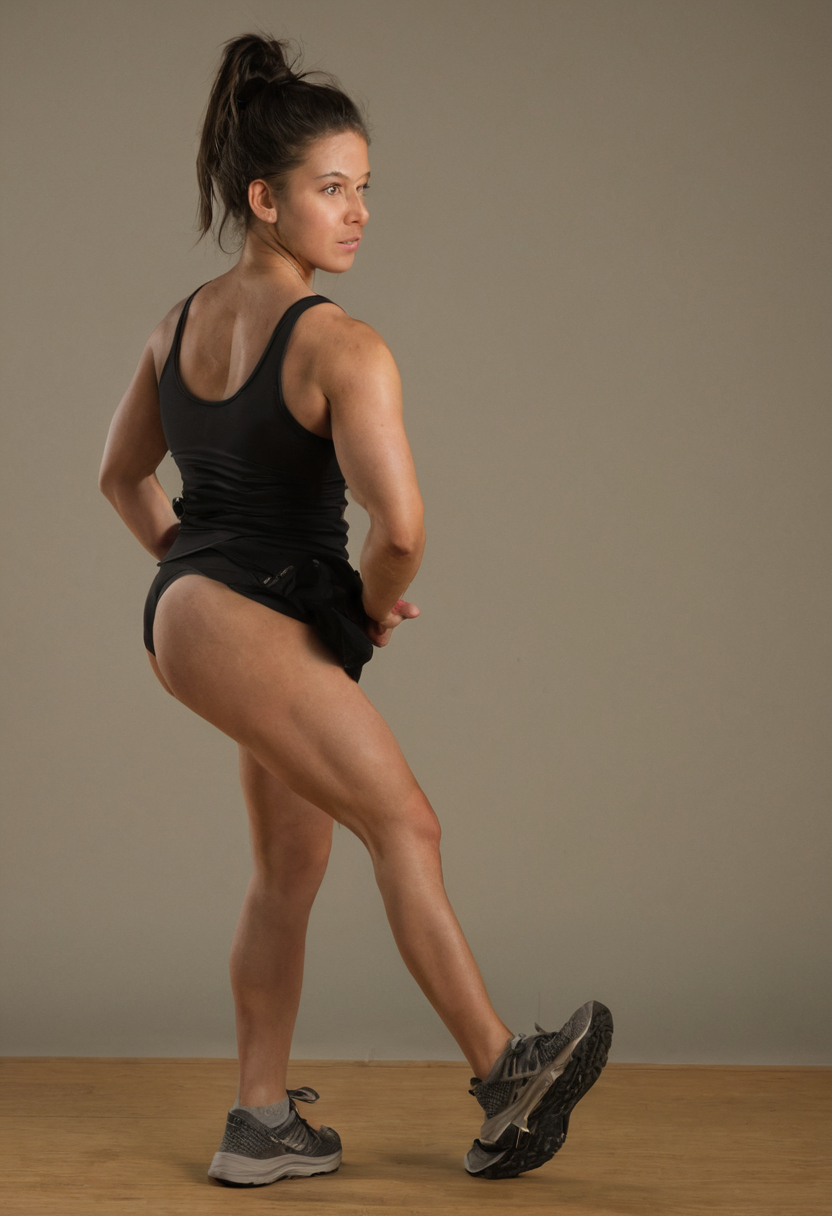
A readiness check can determine whether a beginner should train the same patterns again shown with practical context cues.
Observe walking and stair use first. Repeat the same general and movement-specific warm-up used before the previous session. Then assess repetition speed, perceived effort, alignment, range, and symptom response during the test set.
The beginner readiness screen should produce a train, modify, or stop decision
| Train as planned | Modify the session | Stop or seek assessment |
|---|---|---|
| Normal gait and stairs; usual range after warming up; expected repetition speed and effort; stable technique; no increasing symptoms. | Restricted motion, slower repetitions, unexpectedly high effort, altered mechanics, or soreness affecting the test set. Reduce load, sets, range, effort, or pattern overlap, then reassess. | Increasing or sharp pain, marked swelling, new weakness, inability to move normally, chest symptoms, severe shortness of breath, faintness, dark urine, fever, or other systemic symptoms. |
This checklist is a programming screen, not a diagnostic test. Once the decision is clear, adjacent workout days can be designed around reduced overlap.
Consecutive full-body workout days should alternate emphasis instead of repeating the same dose
When consecutive training days are unavoidable, the second workout should reduce repeated stress by changing emphasis, volume, effort, or training mode.
| Option | Day 1 | Day 2 | Main limitation |
|---|---|---|---|
| Alternate patterns | Squat and push emphasis | Hinge and pull emphasis | Some muscular overlap remains |
| Reduce dose | Normal planned session | Fewer working sets and lower effort | Requires honest effort control |
| Separate modes | Full-body resistance | Easy aerobic activity | Hard cardio may add substantial fatigue |
Intensity can describe external load, such as dumbbell weight, or relative effort, meaning how demanding that load feels. Swapping exercise names is insufficient if both sessions load the same pattern at high effort.
A Day A and Day B full-body workout plan can limit movement-pattern overlap
Day A can emphasize a squat and horizontal push, followed by lower-dose hinge and pull exercises. Day B can emphasize a hinge and pull, followed by lower-dose knee-dominant and push exercises. Keep repetitions smooth and stop a set before range, alignment, or control changes.
Equipment-neutral options include sit-to-stands or goblet squats, hip bridges or dumbbell deadlifts, wall push-ups or machine presses, and band rows or cable rows.
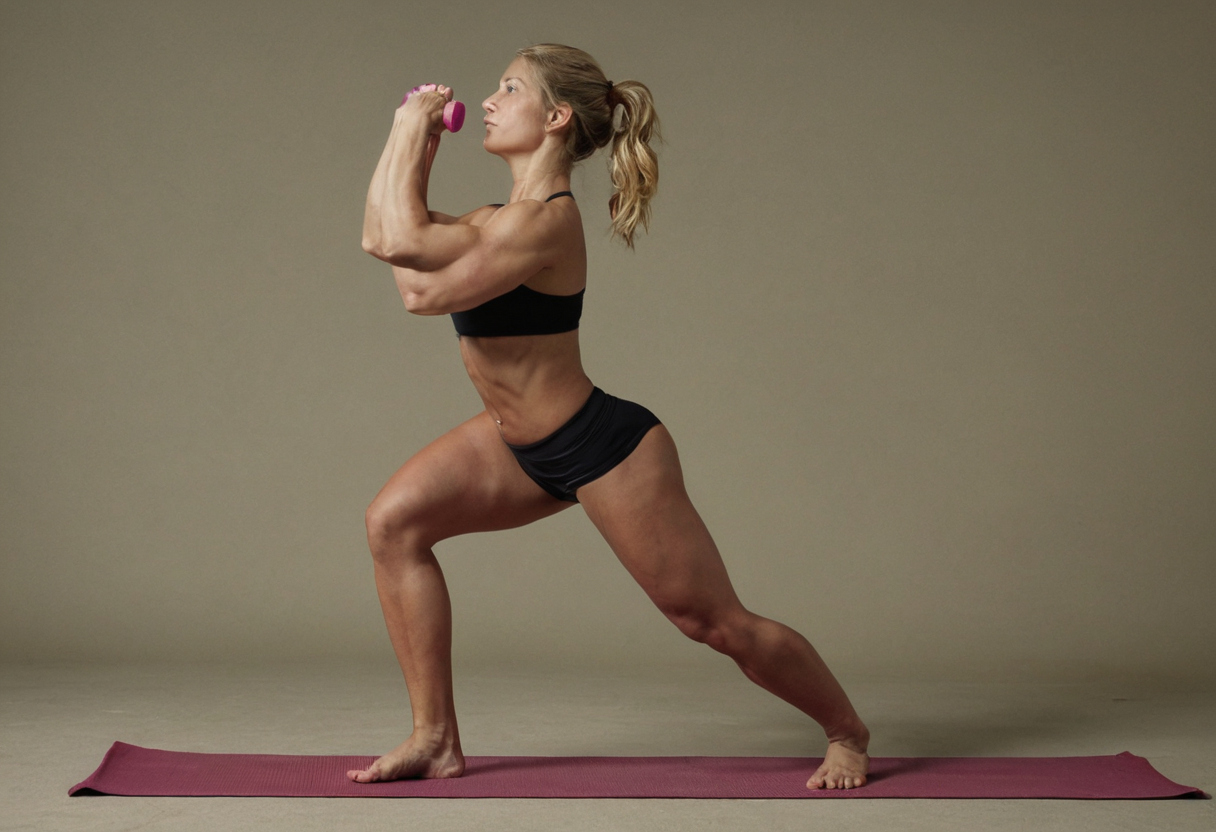
Consecutive full-body workout days should alternate emphasis instead of repeating the same dose shown as an editorial planning reference.
Strength training and easy aerobic exercise can occupy separate consecutive days
Easy aerobic activity permits full-sentence conversation during walking, cycling, or similar rhythmic exercise. Rating of perceived exertion, a personal estimate of difficulty, should remain low. Intervals and hill work are not equivalent because they impose a different dose. Progression should wait until recovery and technique are consistent.
A beginner weekly workout routine should progress only after recovery and technique are consistent
A practical weekly workout routine distributes resistance sessions across the week and increases one demand only after the current dose becomes consistently manageable.
- Two resistance days: full-body training Monday and Thursday, with rest or easy activity on other days.
- Three nonconsecutive days: full-body training Monday, Wednesday, and Friday.
- One back-to-back pair: Day A Monday, reduced-dose Day B Tuesday, then no resistance training until later in the week.
Mobility work can practice comfortable range of motion, but it should not be presented as a way to accelerate tissue recovery. Beginners with practical constraints can choose a workout routine around schedule, equipment, and recovery.
The weekly workout plan should be adjusted from recorded performance rather than soreness alone
Record exercises, working sets, repetitions, loads, perceived effort, symptoms during training, and the next-day response. Change one variable at a time so the response is easier to interpret.
Retain the dose when performance is stable but not consistently repeatable. Progress one variable when technique and recovery remain consistent. Reduce load, sets, effort, or pattern overlap when consecutive training repeatedly produces slower repetitions, reduced range, or technique loss. Pain, swelling, weakness, or systemic symptoms require a different response.
Pain, swelling, weakness, or systemic symptoms are not routine workout recovery
Expected DOMS is usually diffuse and limited to recently exercised muscles. Severe or worsening symptoms, progressive swelling, marked weakness, or disruption of normal walking and daily activity should not be treated as routine soreness.
Beginner workout symptoms require different responses based on severity and progression
| Response | Examples |
|---|---|
| Continue cautiously | Mild, diffuse muscle tenderness that improves during gentle movement without changing technique. |
| Modify and monitor | Soreness that limits motion, alters gait, slows repetitions, or increases during warm-up. |
| Contact a clinician | Focal joint pain, sharp pain, progressive swelling, substantial bruising, fever, persistent numbness or tingling, or weakness affecting daily activity. |
| Seek urgent care | Chest pain or pressure, severe or unexpected shortness of breath, fainting, sudden neurological symptoms, dark urine with severe muscle pain or weakness, or rapidly increasing swelling. |
This table is a triage aid, not a diagnosis. The practical rule is to train when movement and performance remain normal, modify when recovery changes technique, and stop when symptoms exceed expected muscle soreness.
Frequently asked questions
Is it okay for a beginner to do a full-body workout two days in a row?
Yes, if the second session has a reduced or different dose and the readiness screen is normal. Repeating the identical hard session is usually unnecessary.
Can a beginner perform the same full-body workout twice per week?
Yes. Performing the routine on nonconsecutive days is a straightforward beginner schedule when technique and recovery remain consistent.
Is doing the same full-body workout every day effective for building muscle or losing weight?
Daily repetition is not required for either goal. Results depend on the total workout plan, progression, aerobic activity, nutrition, and the ability to recover and maintain technique.
Can a beginner train the same muscles on consecutive days if soreness is mild?
Mild soreness alone does not require cancellation. Use gait, range of motion, test-set technique, repetition speed, effort, and symptom behavior to choose between training and modification.
Does the gym “3-3-3 rule” determine how much recovery a beginner needs?
No universal 3-3-3 rule determines readiness. A fixed formula cannot replace evaluation of session dose, movement-pattern overlap, current performance, and symptoms.