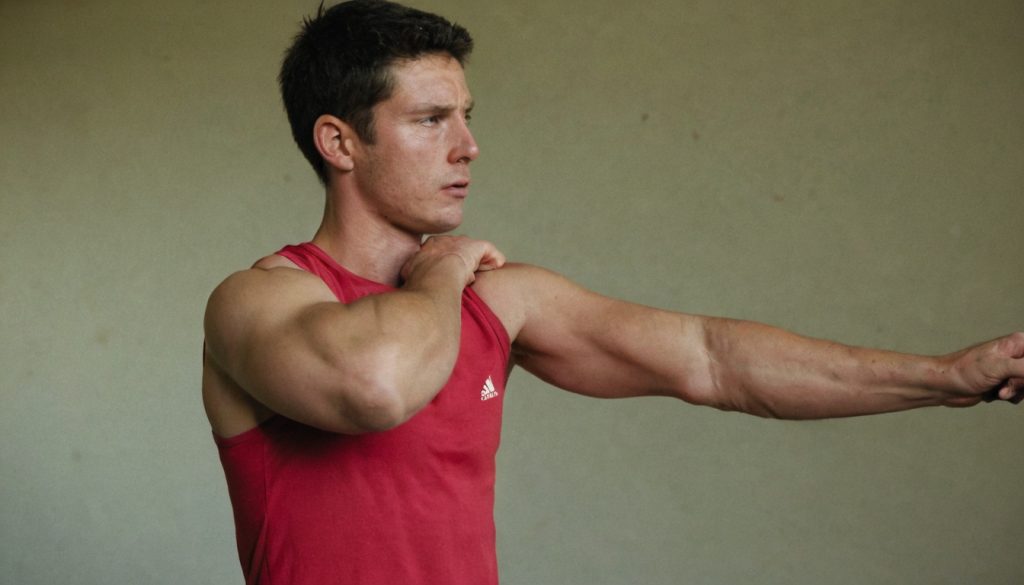
A coach wants dynamic bar work in a client’s program, but unconditioned shoulder tissue turns that goal into anterior capsule strain. Skipping strict prerequisites costs weeks of rehabilitation when the joint must absorb momentum it was never trained to brake. Screening strict capacity first changes the entire planning decision for overhead calisthenics progressions. See also: calisthenics routine.
Contents
- Why do my shoulders hurt during kipping pull-ups but not strict ones?
- What scapular control is required before adding kipping to a calisthenics workout program?
- How much strict pull-up volume prepares the shoulder for dynamic variations?
- Why does eccentric demand make the kipping pull-up harder on the shoulder?
- How should a coach sequence strict and dynamic pull-ups in a workout routine?
Key takeaways
- Kipping pull-ups generate higher peak glenohumeral joint reaction forces than strict pull-ups.
- Before a client attempts a kipping pull-up, they must demonstrate controlled scapular upward rotation, posterior tilting, and retraction throughout the full range of shoulder flexion.
- Published progression models generally require athletes to complete multiple sets of strict pull-ups at controlled tempos before introducing momentum.
- The downward phase of a kipping pull-up requires rapid eccentric muscle action to decelerate the body's momentum before the next repetition begins.
- A safe progression moves from isometric hangs to slow eccentric strict pull-ups, concentric strict pull-ups, and finally controlled kipping variations.
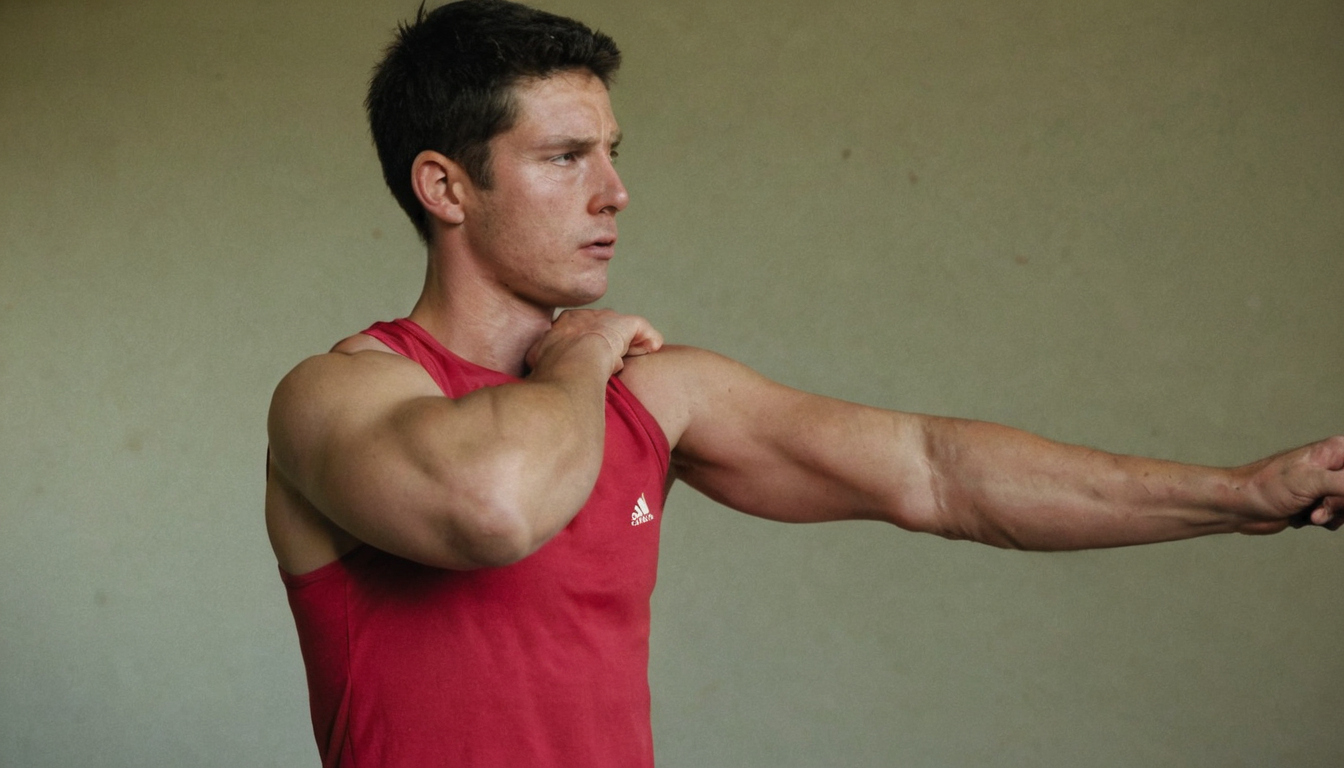
Why does a kipping pull-up hurt the shoulder before the strict version is ready.
Why do my shoulders hurt during kipping pull-ups but not strict ones?
Kipping pull-ups generate higher peak glenohumeral joint reaction forces than strict pull-ups. The rapid transition from the arch to the hollow body position relies on passive connective tissue deceleration rather than controlled concentric muscle contraction. For coaches planning a calisthenics routine, introducing dynamic bar work before strict strength is established places unconditioned ligaments under excessive tensile load.
Before adding momentum-based repetitions, a coach needs a concrete screening sequence. Use this checklist to determine whether a client has the baseline tissue tolerance required for dynamic overhead pulling:
- Confirm the client can hold a strict dead hang with active scapular depression for 30 seconds, without shoulder elevation or visible shaking.
- Verify at least five consecutive strict pull-ups through a full range of motion, with a two-second eccentric lowering phase on every repetition.
- Assess the transition between the arch position and the hollow position while suspended. The movement must be deliberate, not ballistic.
- Rule out anterior shoulder pain during any phase of the strict progression. Pain indicates the capsule cannot tolerate current loads.
A kipping pull-up eliminates the static start. The athlete swings into an arch position to build downward momentum, then snaps aggressively into the hollow body position to propel upward. This rapid reversal multiplies the force transmitted through the glenohumeral joint. The shoulder does more than lift body weight: it decelerates a falling mass and redirects it vertically within a fraction of a second. Unconditioned tissues facing these amplified forces fail faster than they adapt.
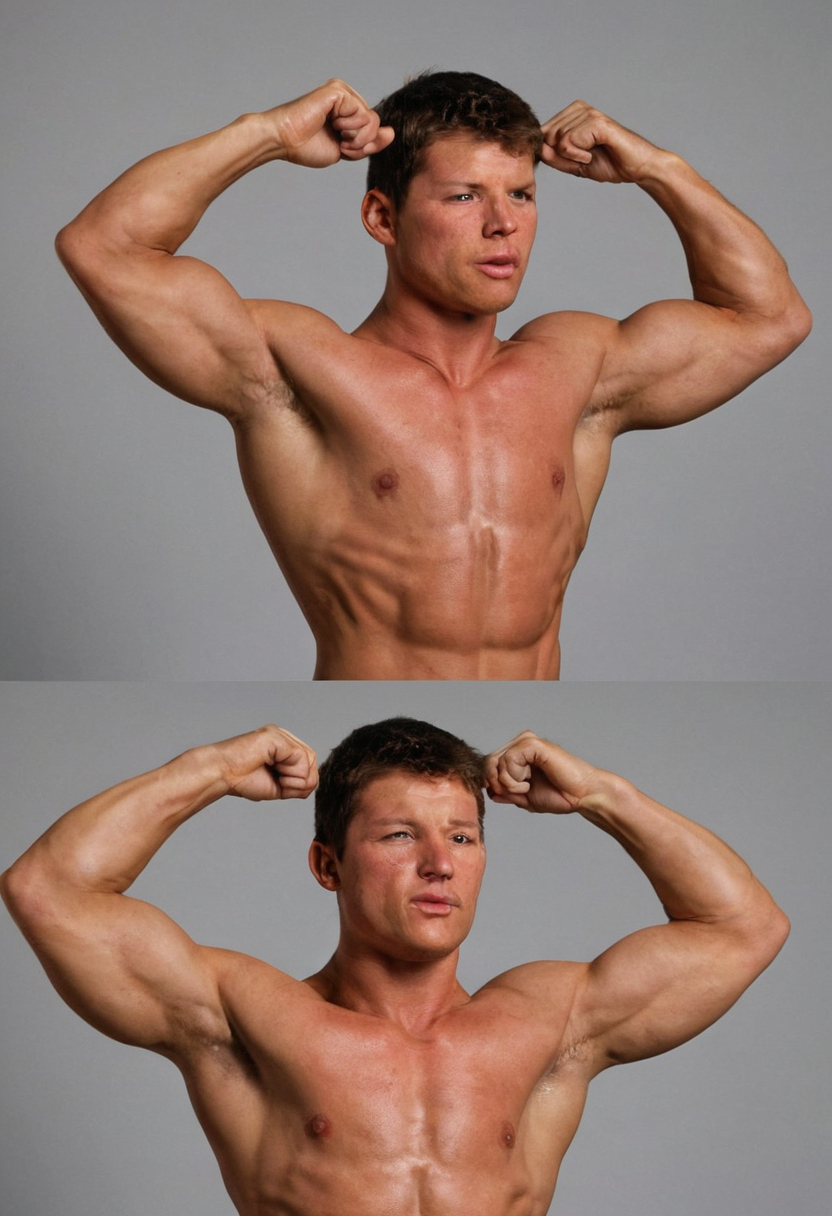
Why do my shoulders hurt during kipping pull-ups but not strict ones.
The anterior capsule stretches to absorb kinetic energy that the muscles failed to manage. Repeated exposure to this passive loading causes microtrauma to the collagen fibers stabilizing the front of the shoulder. Over multiple training sessions, the cumulative strain manifests as anterior shoulder pain, often diagnosed clinically as capsular irritation or early instability. Strict pull-ups prevent this mechanism because their slow tempo keeps active muscular tension in control throughout the range of motion.
What scapular control is required before adding kipping to a calisthenics workout program?
Before a client attempts a kipping pull-up, they must demonstrate controlled scapular upward rotation, posterior tilting, and retraction throughout the full range of shoulder flexion. Scapular dyskinesis, an observable alteration in normal scapular motion during strict overhead movements, indicates that the stabilizing muscles cannot safely manage the velocity and load spikes inherent to the kip.
Failing even one criterion means the tissue lacks the motor control to decelerate a kip. Passing all four establishes the mechanical baseline for dynamic loading.
Biomechanical analyses of overhead pulling show that the lower trapezius and serratus anterior share the load of decelerating the humerus at end-range extension. When the lower trapezius fatigues or lacks baseline strength, the upper trapezius and levator scapulae compensate by elevating the scapula. This substitution pattern narrows the subacromial space and increases strain on the anterior glenohumeral capsule during the rapid reversal from arch back to hollow. A client whose strict pull-up relies heavily on upper trapezius elevation will repeat that compensation faster and under higher loads during a kip.
The latissimus dorsi generates the primary pulling force, but the lower trapezius and serratus anterior determine where that force travels through the shoulder girdle. Without their coordinated timing, peak muscular tension shifts from contractile tissue to passive ligamentous structures.
Any rating beyond normal disqualifies the client from kipping progressions. Subtle dyskinesis often becomes obvious once external load or momentum enters the equation, so a borderline pass on a bodyweight screen predicts failure under a kip. If the unweighted assessment is ambiguous, repeat the observation with light dumbbell shoulder flexion.
How much strict pull-up volume prepares the shoulder for dynamic variations?
Published progression models generally require athletes to complete multiple sets of strict pull-ups at controlled tempos before introducing momentum. This baseline ensures that the latissimus dorsi, biceps brachii, and scapular retractors have both the concentric force production and the eccentric braking capacity needed to decelerate the body during the downward phase of a kip.
Clinical coaching standards typically recommend five consecutive strict repetitions across three working sets as a minimum threshold before adding kipping mechanics. Tempo matters more than raw repetition counts. A two-second concentric pull paired with a three- to four-second eccentric lowering phase builds the specific tendon stiffness required to absorb rapid load transitions at the bottom of a swing. Athletes who can control this descent repeatedly demonstrate adequate musculotendinous readiness for dynamic bar work.
Why does eccentric demand make the kipping pull-up harder on the shoulder?
The downward phase of a kipping pull-up requires rapid eccentric muscle action to decelerate the body’s momentum before the next repetition begins. If a client has trained only slow, controlled strict repetitions, their musculotendinous units lack the rate of force development needed for this braking action. The burden of deceleration then shifts directly onto the passive structures of the glenohumeral joint.
Eccentric muscle action occurs when a muscle lengthens under tension to absorb kinetic energy. A strict pull-up controls the descent through concentric and eccentric phases at a predictable speed, keeping the load within the capacity of the latissimus dorsi, biceps brachii, and scapular retractors. The kipping variation adds a swing that multiplies downward velocity. The rotator cuff muscles must then generate high force in a fraction of the time available during a strict repetition. Tendon tissue adapts to load magnitude over weeks, but strain rate tolerance demands specific exposure to fast eccentrics. Without that exposure, the connective tissue fails to distribute force evenly.
This mechanism explains why overhead athletes with eccentric deficits present with superior labral tears or anterior capsular sprains rather than isolated muscle strains. The muscle yields before it can protect the joint. A coach planning dynamic bar work must therefore build eccentric rate of force development through strict tempo variations before introducing the swing.
How should a coach sequence strict and dynamic pull-ups in a workout routine?
A safe progression moves from isometric hangs to slow eccentric strict pull-ups, concentric strict pull-ups, and finally controlled kipping variations. Coaches building a workout routine must treat the kip as a distinct skill with its own preparatory phase, not merely an easier regression for clients who cannot yet perform a strict repetition.
Tendon adaptation sets training frequency during this preparatory phase. Connective tissue remodels more slowly than skeletal muscle, so adequate recovery between consecutive training days prevents cumulative microtrauma at the bicipital groove. Two to three strict pulling sessions weekly, separated by rest days, allow collagen synthesis to keep pace with mechanical demand.
This structured regression makes the coach assess whether the initial program skipped necessary strict prerequisites or simply increased volume faster than the tissue could adapt. Screening strict capacity first changes the entire planning decision for overhead calisthenics progressions.
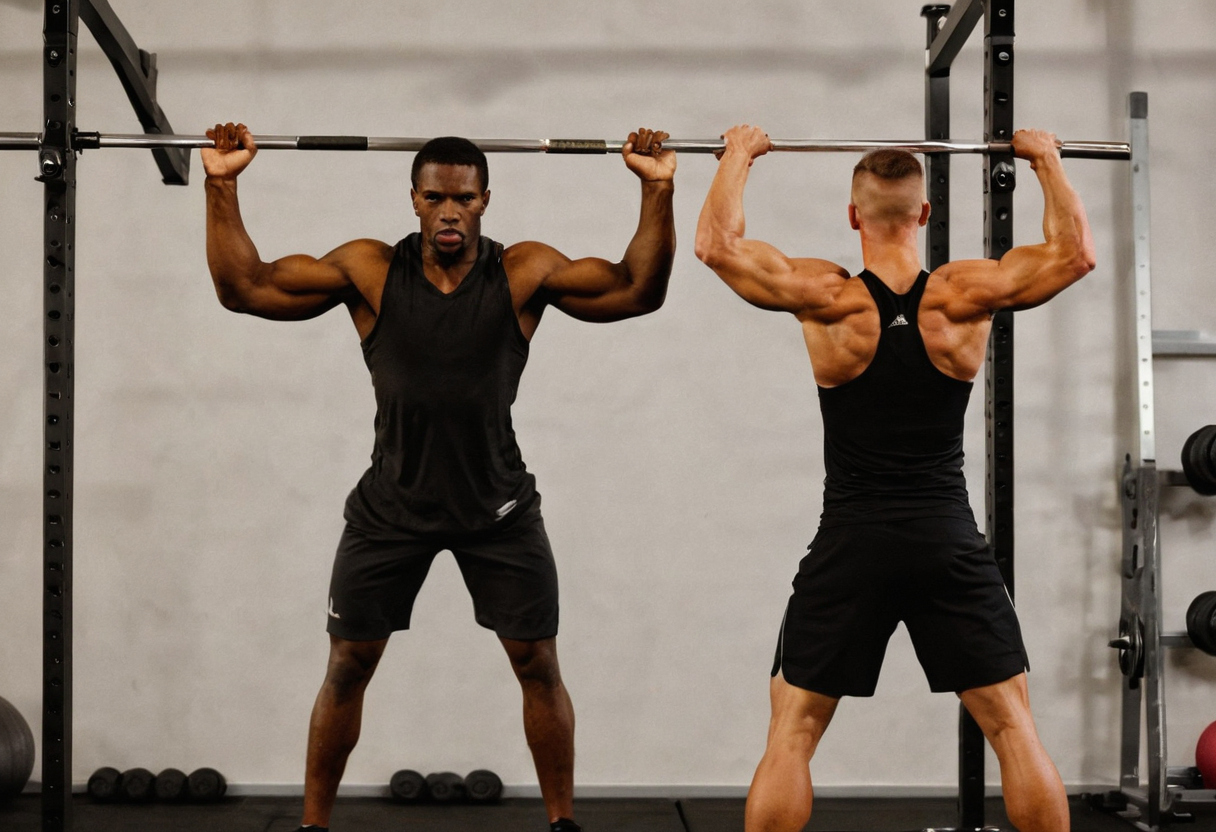
How should a coach sequence strict and dynamic pull-ups in a workout routine.
For more on this topic, see other guides on this site.